Puerto de la Cruz: Things to Do, Beaches and Old Town Guide
Puerto de la Cruz combines a working fishing harbour, historic streets, tropical gardens and a dramatic volcanic coastline. On Tenerife’s north coast, below the La Orotava Valley, it suits visitors who enjoy exploring on foot, stopping for local food and mixing cultural sights with time beside the Atlantic.
In this guide
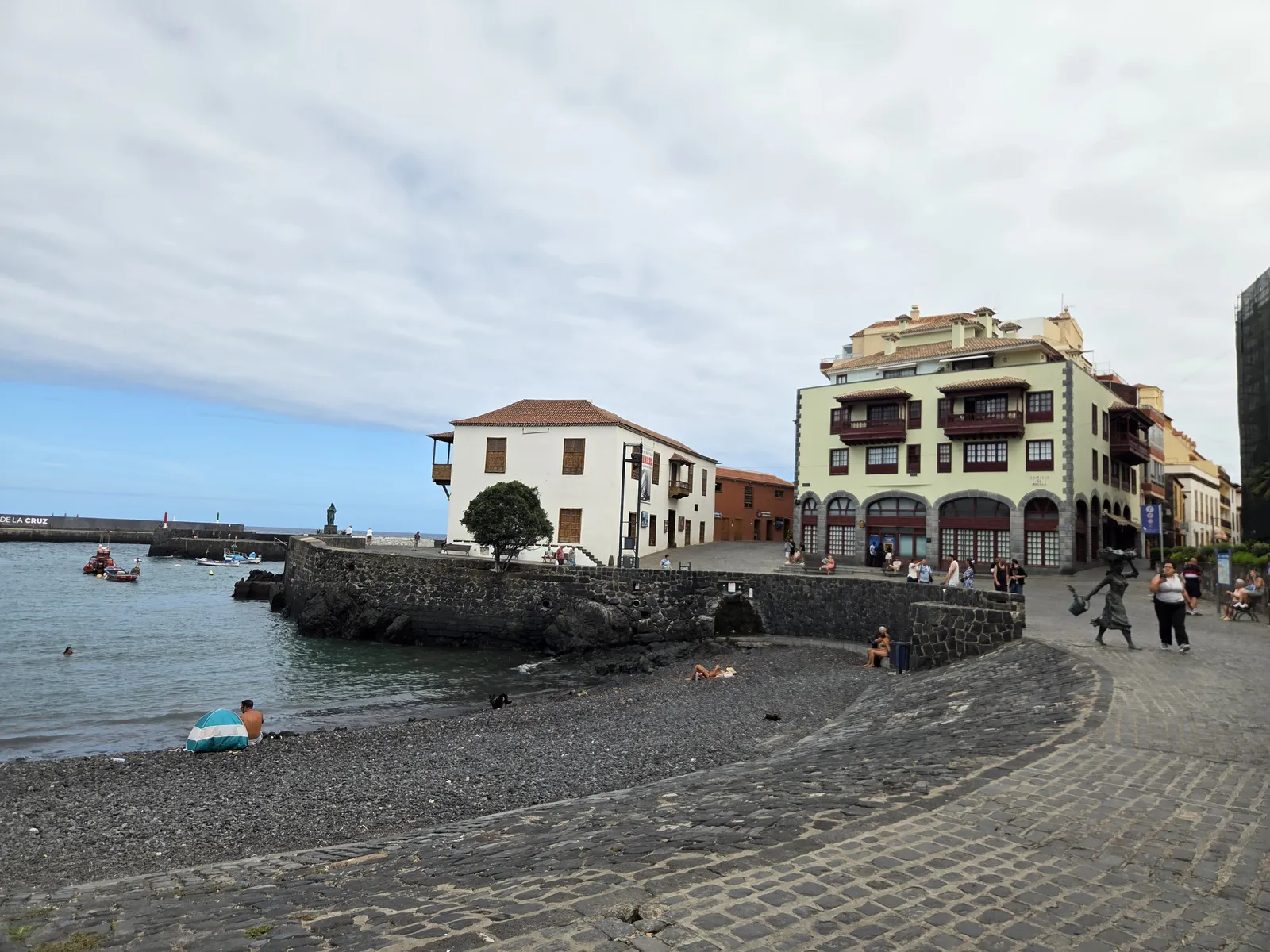
Explore the old town and fishing harbour
Start around Plaza del Charco, the lively square behind the harbour. Its cafés and shaded seating make it a useful meeting point, but the surrounding streets deserve equal attention. Walk towards the waterfront for fishing boats, volcanic-stone walls and the small Playa del Muelle, then explore inland among traditional balconies and pedestrian lanes.
Beside the harbour, Casa de la Aduana recalls the town’s trading history. Continue west into La Ranilla, a former fishing neighbourhood where colourful façades, restaurants and large outdoor murals give the streets a distinct character. It is particularly rewarding for an unhurried walk rather than a checklist of monuments.
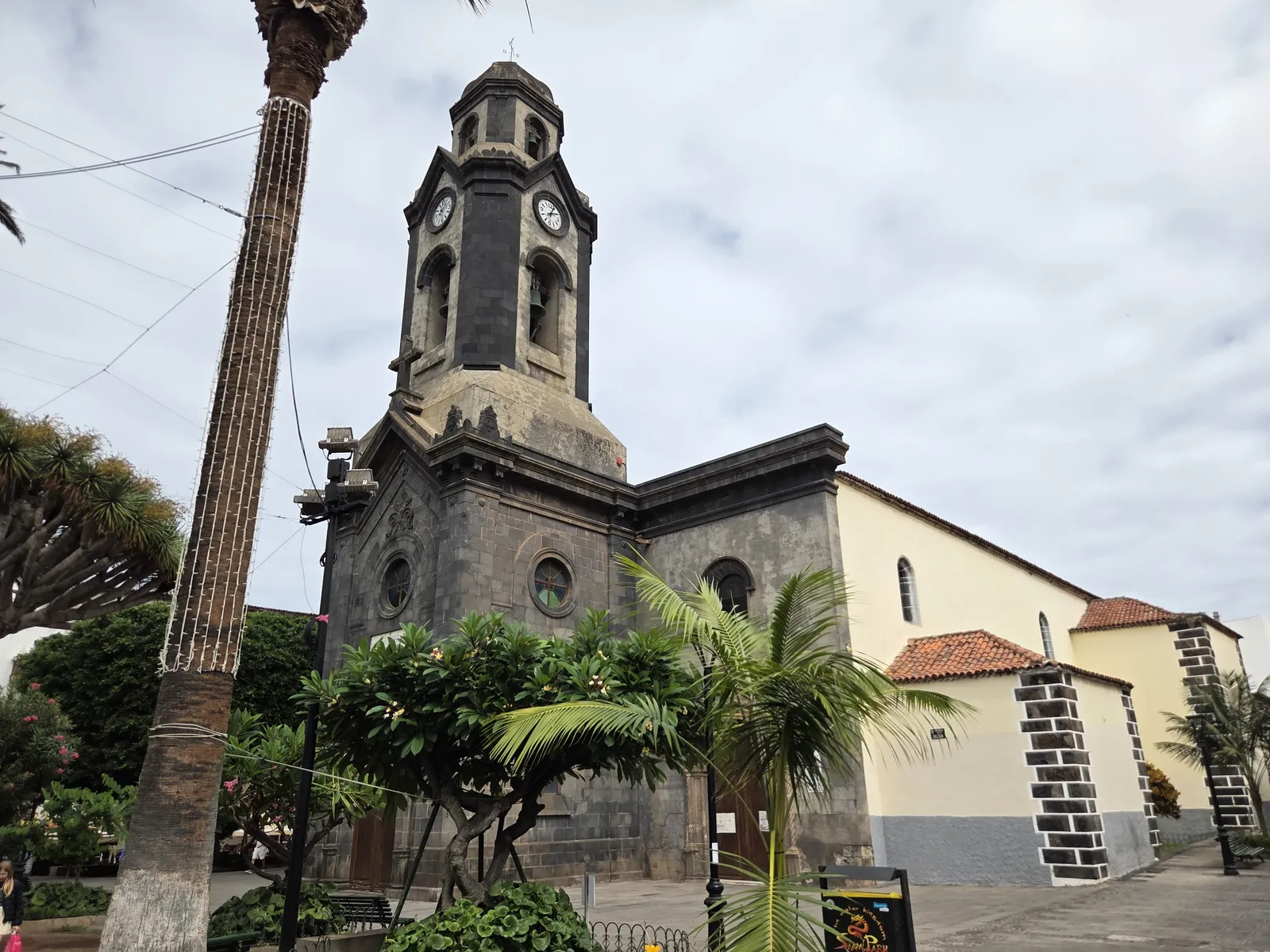
A short distance east of Plaza del Charco, Plaza de la Iglesia surrounds the Church of Nuestra Señora de la Peña de Francia. The church and neighbouring gardens make a worthwhile architectural stop; respect services if entering. Nearby Casa de los Balcones-style wooden galleries are characteristic of Canarian architecture, but should not be confused with the named attraction in La Orotava.
Walk from San Telmo to Lago Martiánez
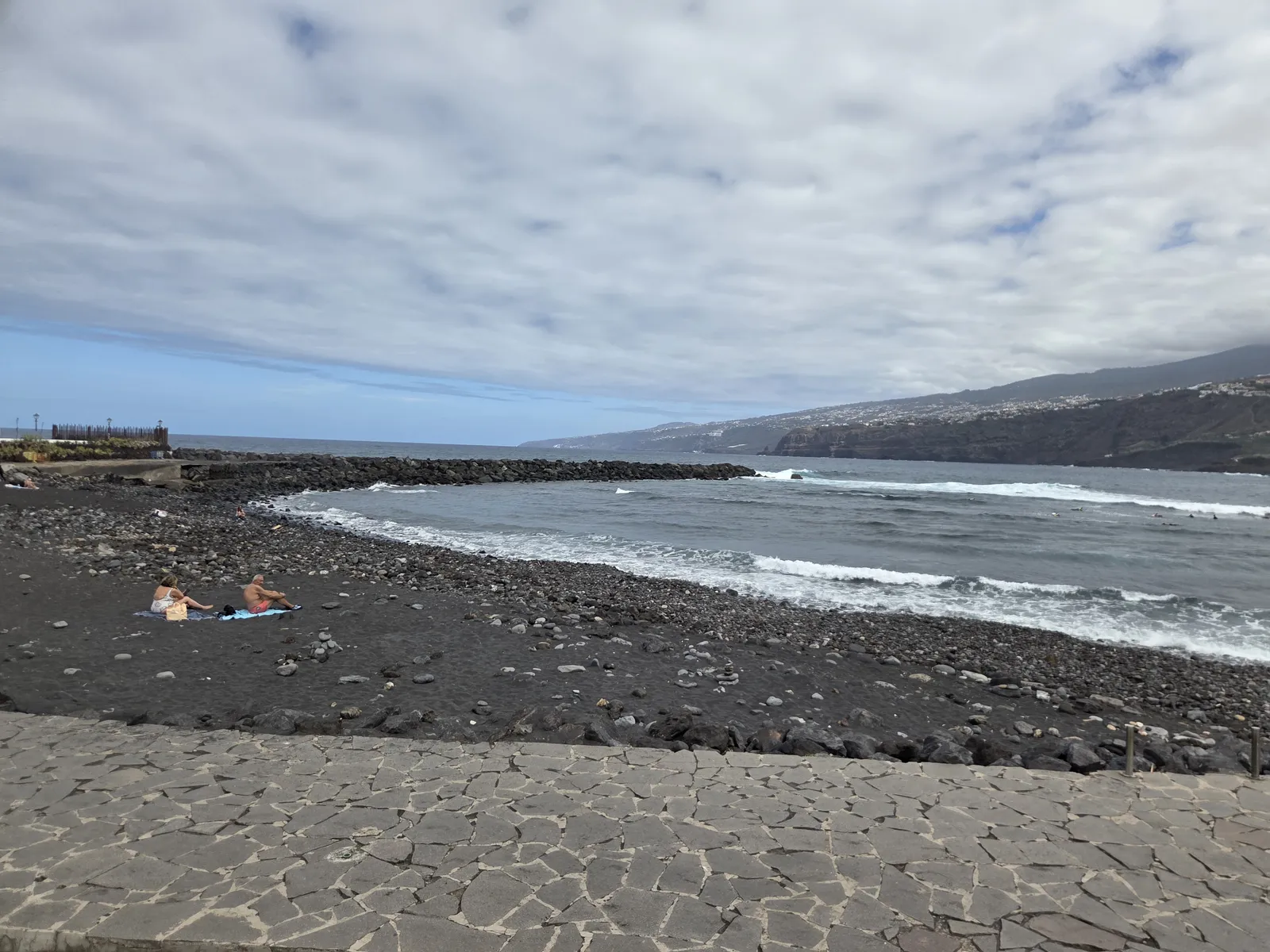
From the church area, head towards Paseo de San Telmo. This pedestrian waterfront links the historic centre with the more resort-oriented eastern seafront. Its appeal is straightforward: ocean views, waves breaking against volcanic rocks and plenty of places to pause.
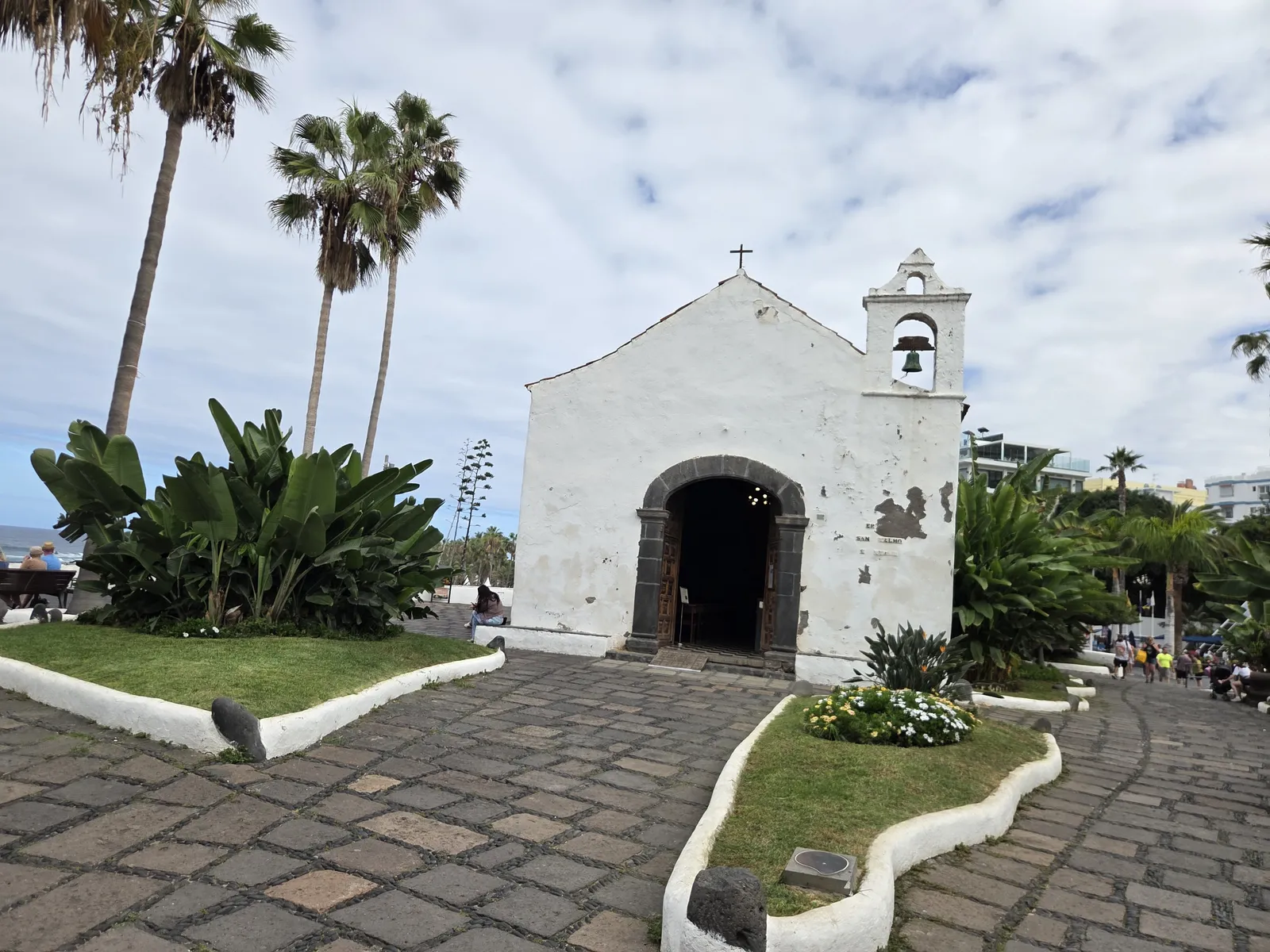
The small Ermita de San Telmo stands above the shore among palms and planting. Its modest whitewashed exterior contrasts with the larger parish church inland. Below, the rocky bathing area belongs to the open coastline; it is separate from the swimming-pool complex farther east.
Continue to Lago Martiánez, the seawater swimming complex shaped by César Manrique’s design. Pools, volcanic stone, gardens and sculpture make it one of the town’s defining attractions. It is a managed, ticketed complex rather than a collection of natural rock pools. Allow several hours if swimming, and confirm current admission, opening hours and which areas are operating before planning your visit around it.
Choose the right beach for your visit
Puerto de la Cruz has attractive coastal scenery, but its beaches face the Atlantic. Conditions vary considerably, and a sheltered-looking corner is not a guarantee of safe swimming.
Playa Jardín
West of the centre, the Playa Jardín complex combines dark volcanic sand with landscaped surroundings. Castillo de San Felipe marks its eastern approach, while Punta Brava lies at the western end. This is the strongest choice for a substantial beach walk, with more space than the small central coves.
Bathing restrictions have changed repeatedly following water-quality tests. Check the latest municipal notices and signs at the specific beach section before entering the water. Restrictions may affect individual bathing zones rather than the entire waterfront.
Playa Martiánez and the central bathing spots
At the eastern end of the promenade, Playa Martiánez has dark sand, stones and an exposed setting beneath the cliffs. It attracts surfers, but is a less dependable choice for relaxed family swimming. Playa del Muelle is much smaller and sits beside the fishing harbour; San Telmo offers rocky access rather than a broad sandy beach. Follow flags, barriers and lifeguard instructions everywhere.
Visit the Botanical Garden and elevated viewpoints
The Jardín de Aclimatación de La Orotava, usually called the Botanical Garden, is in Puerto de la Cruz despite its historic name. Located on Calle Retama in the upper town, it contains tropical and subtropical collections, mature palms and impressive trees. Allow around an hour, longer if you enjoy botany.
Combine it with the La Paz area and Mirador de La Paz for a different perspective over the eastern coastline. Walking up from the waterfront involves a noticeable climb; a bus or taxi uphill followed by a walk down can make the outing easier.
Parque Taoro is a separate hillside green space overlooking the town. Choose it for gardens, paths and elevated views closer to the centre. Sitio Litre, a privately managed orchid garden, is another option for garden enthusiasts. With limited time, prioritise the Botanical Garden and choose one additional green space.
Loro Parque and nearby excursions
Loro Parque, beside Punta Brava, is a major zoo attraction requiring its own substantial visit. If it interests your group, reserve most of a day rather than squeezing it between sightseeing stops. Check tickets, opening arrangements and transport directly with Loro Parque.
For a contrasting excursion, visit La Orotava’s historic centre uphill from the coast. Its traditional houses and steep streets complement Puerto’s maritime character. Teide National Park is another worthwhile day trip, but requires separate transport planning and weather checks; it is not a quick addition to a town walk.
How to spend one day in Puerto de la Cruz
Spend the morning around Plaza del Charco, the harbour, La Ranilla and the parish church. Stop for lunch in the old town; look for Canarian dishes such as papas arrugadas with mojo, grilled fish and local cheese.
In the afternoon, walk through San Telmo to Martiánez. Choose either pool time or an uphill visit to the Botanical Garden. Trying to include both, Playa Jardín and Loro Parque makes the day unnecessarily rushed. With two days, divide your time between the historic waterfront and gardens, then a beach or major paid attraction.
Getting there, where to stay and when to visit
By car, approach via the TF-5 and use signed public parking before exploring on foot. Central streets include pedestrian areas and restricted access, so avoid navigating directly to a waterfront landmark without checking vehicle access.
TITSA route 100 connects Santa Cruz with Puerto de la Cruz. Route 343 serves both airports and connects with the south. Check current departures and your last return journey before travelling.
Stay near the old town for convenient evening walks and restaurants, or consider La Paz for its gardens and elevated setting, allowing for hills. Northern Tenerife can be cloudier and wetter than the southern resorts: bring a light layer and keep swimming plans flexible. For a first visit, the harbour, old town and San Telmo promenade make the most rewarding core itinerary.