Garachico, Tenerife: What to See, Natural Pools and a Historic Town Walk
Garachico brings together Tenerife’s maritime history, traditional architecture and volcanic coastline in a compact town best explored on foot. Its squares and churches reward a leisurely visit, while the natural pools of El Caletón reveal how the eruption of 1706 reshaped the shore. Allow a half-day to enjoy both sides of Garachico without rushing.
In this guide
Where is Garachico, and why is its history important?
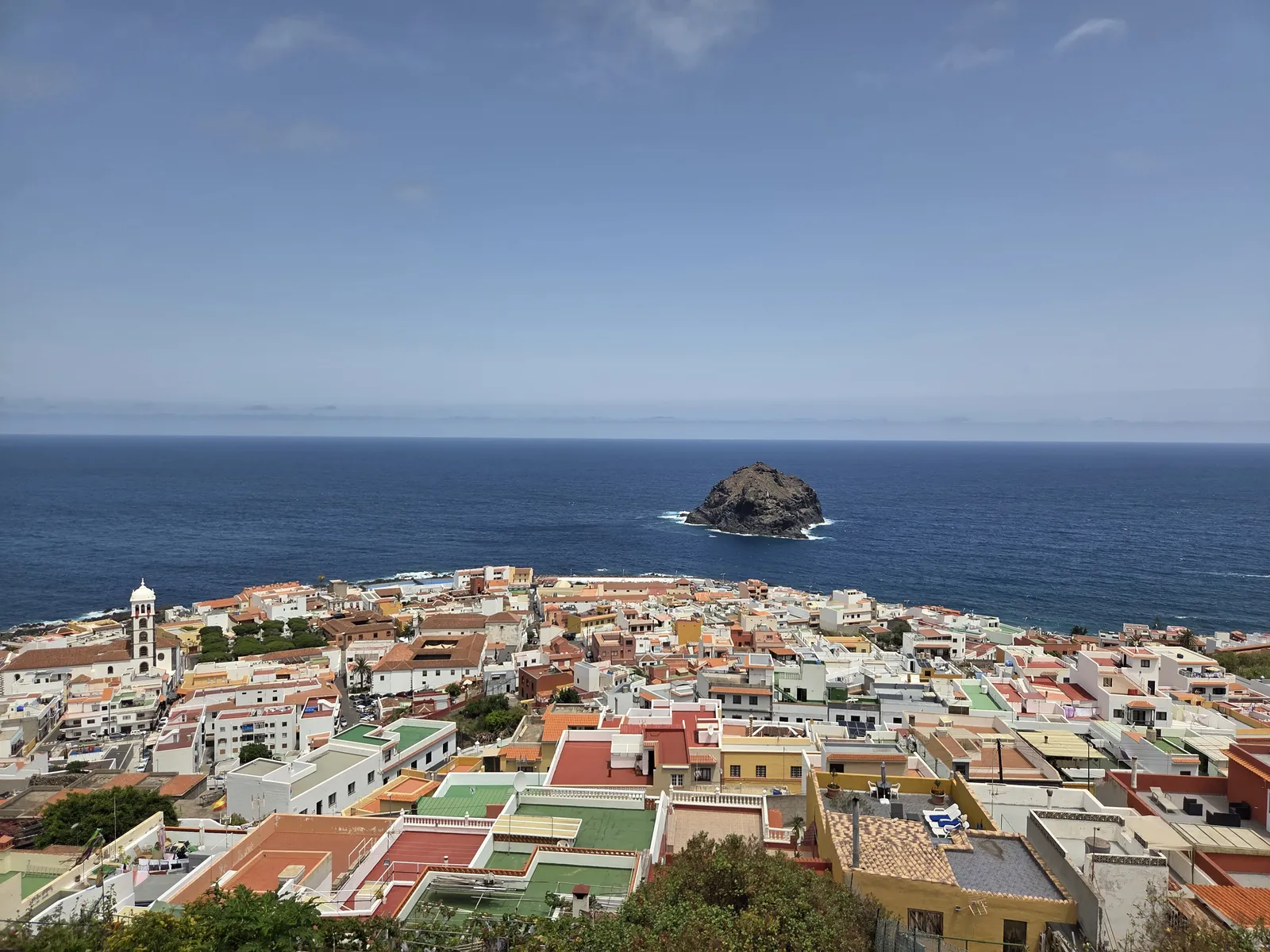
Garachico lies on Tenerife’s north-west coast, between Icod de los Vinos and Los Silos, in the wider Isla Baja region. The historic centre sits below the steep La Culata slopes. Although the municipality extends uphill into pine forest and volcanic terrain, its principal visitor attractions cluster around the coastal town.
Founded in 1496 by the Genoese merchant Cristóbal de Ponte, Garachico became an important commercial port. Its prosperity helps explain the concentration of convents, churches and substantial houses that makes a walk here more rewarding than a simple seafront stop.
In 1706, lava from the Trevejo eruption reached the town and buried its old harbour, disrupting its trading role. Some buildings survived; others were reconstructed. The same eruption created the lava coastline around El Caletón. Understanding that connection gives meaning to both the historic streets and the swimming pools.
What to see in Garachico’s historic centre
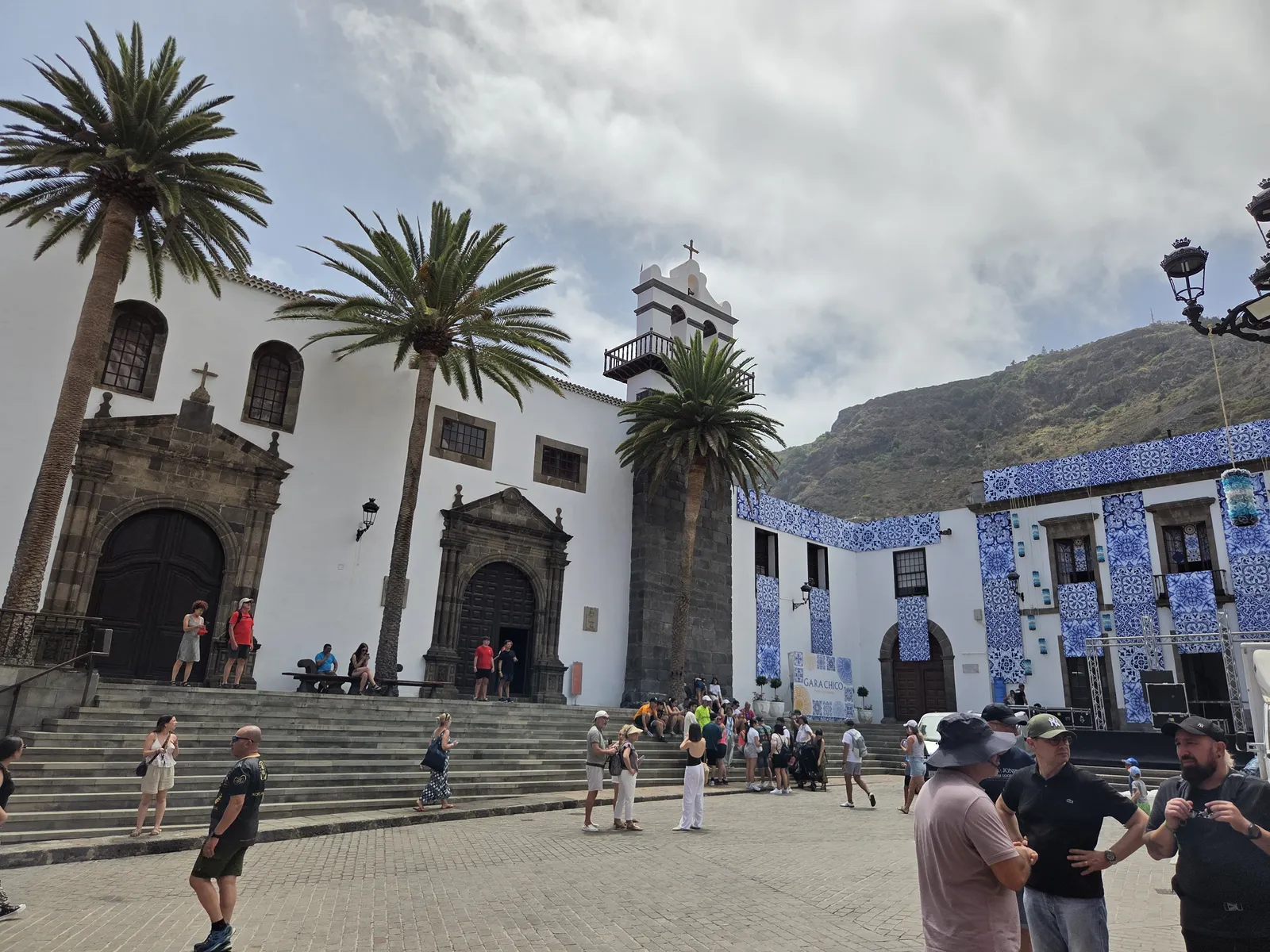
Begin around Plaza de la Libertad, where shade, benches and surrounding historic buildings make a comfortable introduction. Distances are short, so explore the adjoining streets rather than moving directly between monuments. Stone doorways, wooden details and tiled roofs reveal the town’s architectural character.
Santa Ana, San Francisco and the historic houses
The Church of Santa Ana is one of Garachico’s essential landmarks. Originally built in the 16th century, it required reconstruction after the eruption. Visit the interior when access allows, respecting worship and any posted visiting arrangements.
The former Convent of San Francisco is another key stop beside the central square. Together with Santa Ana, it illustrates the importance of religious foundations in the old port town. Around the same area, look for Casa del Marqués de la Quinta Roja and the stone façade of Casa de los Condes de La Gomera, also called Casa de Piedra: these last two names describe the same building.
Puerta de Tierra and the former harbour
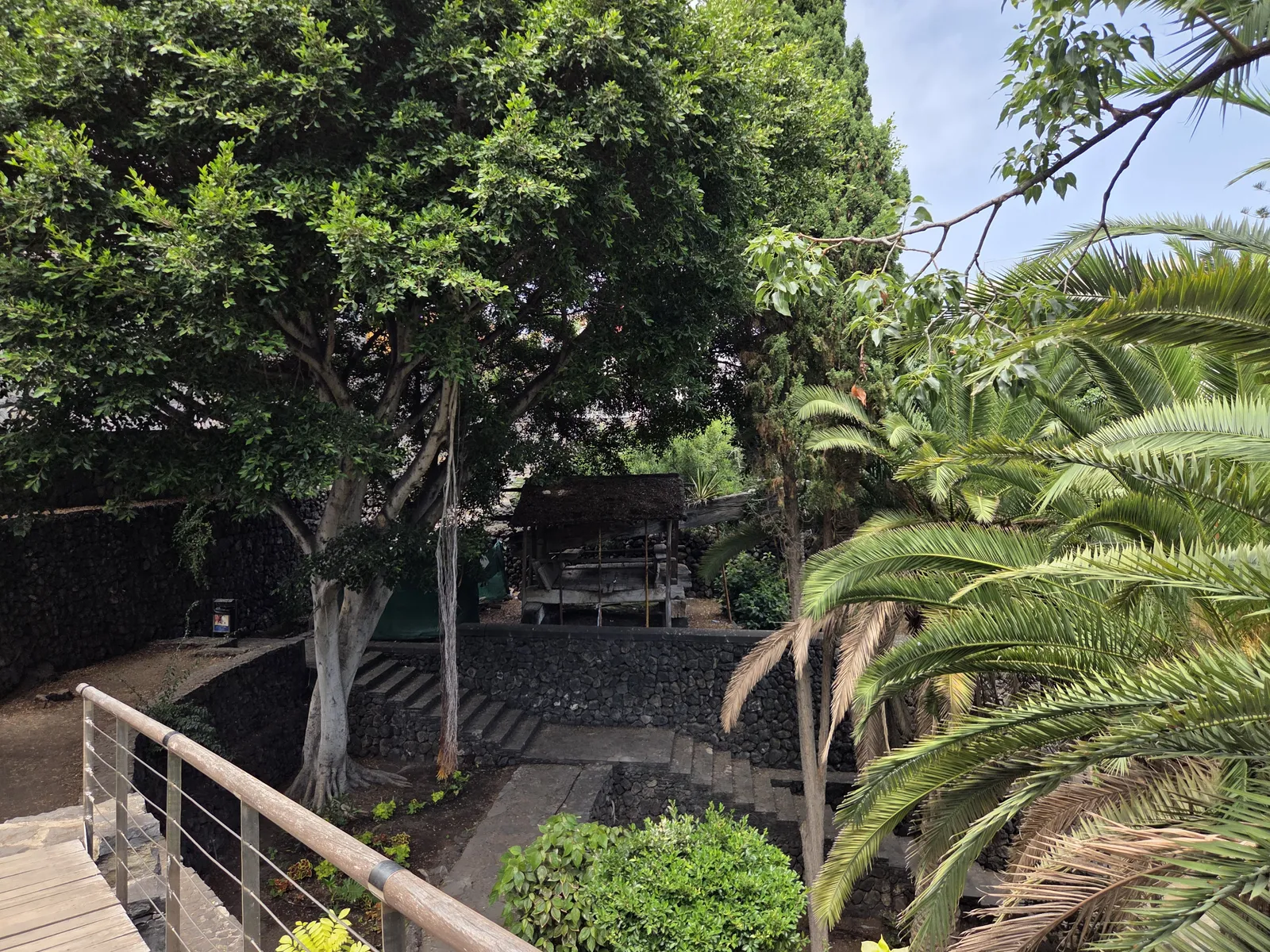
Continue to Plaza Juan González de la Torre and Parque de la Puerta de Tierra. Inside the garden, the surviving gateway marks the entrance to the former harbour. Its position inland from today’s shore makes the transformation of Garachico particularly tangible.
The park also contains an old wine press and a corner dedicated to poet Rafael Alberti. It is a useful historical stop rather than simply a pleasant garden. Check access on arrival; the surrounding streets remain worthwhile if the gates are shut.
With more time, extend the walk towards the former Santo Domingo convent and the Chapel of San Roque. They add religious and cultural context without requiring a separate excursion. For interior visits, exhibitions and local events, consult the municipal tourism website rather than assuming every historic building operates as a daily museum.
San Miguel Castle, the waterfront and Roque de Garachico
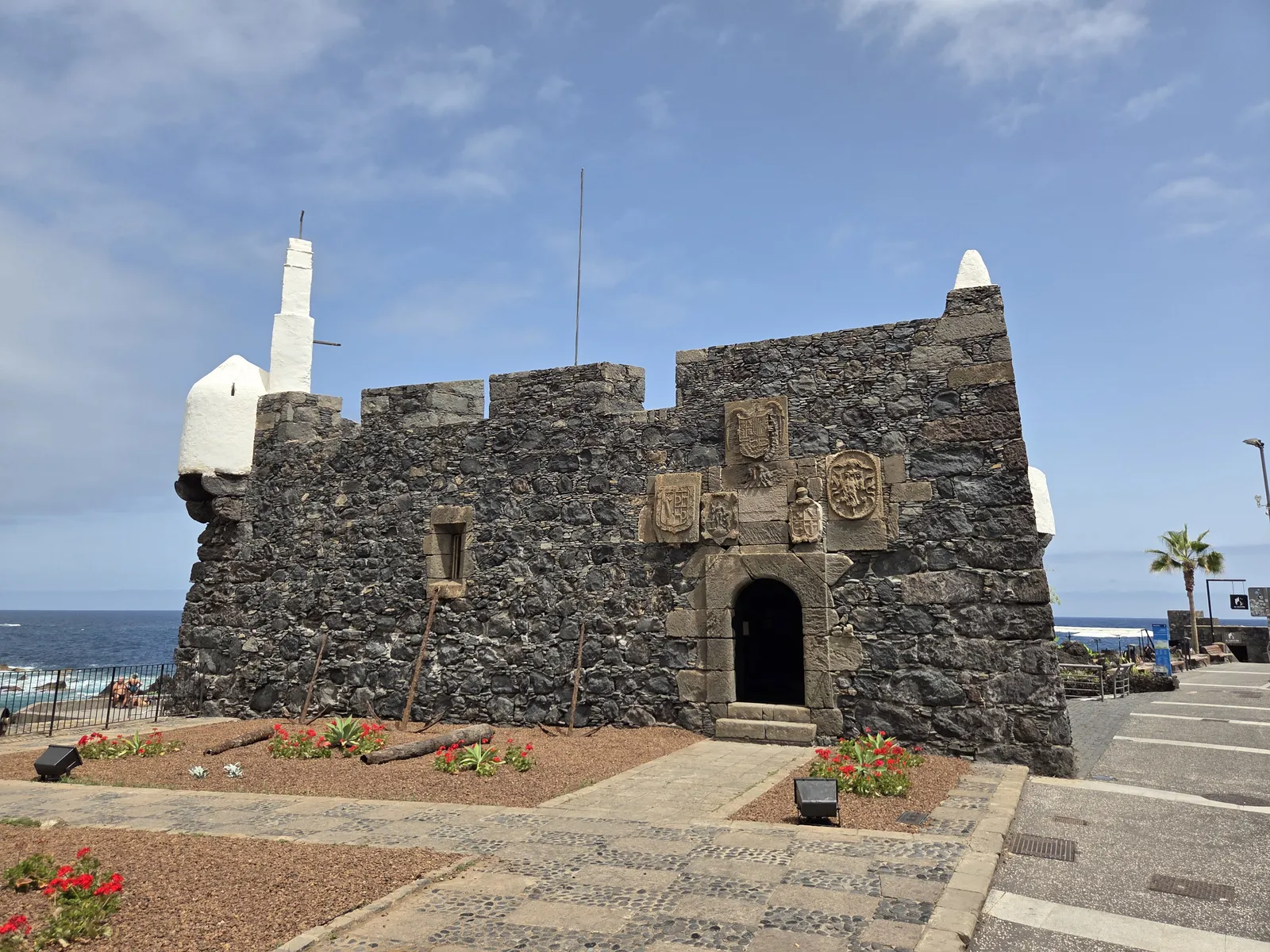
San Miguel Castle stands beside El Caletón. This small 16th-century coastal fortress once defended the port, and its dark stone walls provide a clear contrast with the whitewashed buildings inland. Even an exterior visit helps connect Garachico’s maritime wealth with the need to protect it.
Continue along the waterfront for views towards Roque de Garachico, the isolated rock offshore. It is a coastal landmark to admire from land. The modern marina is separate from the historic harbour buried by lava; seeing both the current waterfront and Puerta de Tierra avoids confusing their locations.
Make more of your Tenerife trip.
Compare excursions and activities to complement your visit to Garachico.
Swimming at El Caletón natural pools
El Caletón is a series of seawater pools among lava formations beside Avenida Tomé Cano. Its appeal is the combination of clear water, irregular volcanic rock and proximity to the historic centre. It is a different experience from a sandy beach, with limited comfortable space for spreading out.
Swimming depends on sea conditions and access notices. Waves can wash across rocks and into pools, so calm-looking water in one corner does not establish that the whole area is safe. Respect barriers and instructions, supervise children closely and stay away from exposed edges during swell.
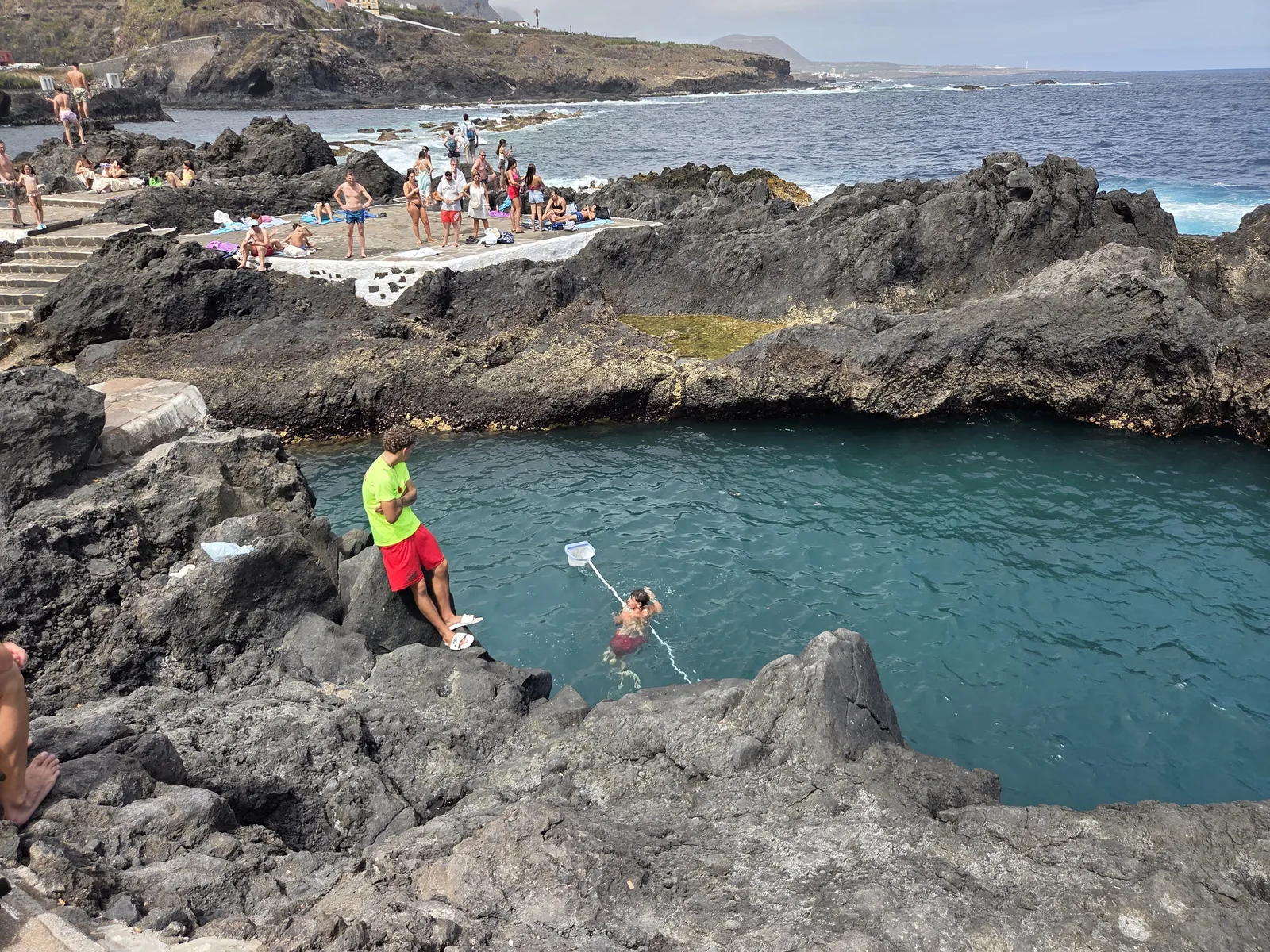
Bring secure footwear for the approach, sun protection and a towel. Steps, wet surfaces and uneven rock make this less straightforward than a conventional pool. Check the town council’s notices before travelling specifically to swim, and keep the town walk as an enjoyable alternative.
How much time to allow and when to visit
Allow around two hours for the principal streets and landmarks, or three to four hours with lunch and a longer waterfront stop. Swimming or visiting interiors can comfortably turn Garachico into a half-day outing.
A practical sequence is Plaza de la Libertad, Santa Ana and San Francisco, followed by Puerta de Tierra, San Miguel Castle and El Caletón. Finish with a meal in the centre: look for Canarian dishes such as papas arrugadas with mojo, and ask about available fish and its price before ordering.
Garachico is worth visiting throughout the year, although northern cloud and Atlantic swell can change the experience. Summer celebrations bring additional atmosphere and crowds; the San Roque festivities are particularly important locally. Check the current programme before planning around an event. For reduced mobility, distinguish the relatively compact street walk from stepped gardens, church entrances and rocky bathing access.
Getting to Garachico by car or bus
Garachico is reached along the northern coastal road network. Check current road conditions before setting out, particularly when approaching from the west. Use signed public parking and permitted spaces around the town, then explore on foot. Arrive earlier on busy days and avoid circling the narrow historic streets in search of a space beside each attraction.
TITSA route 363 links the Puerto de la Cruz, Icod and Buenavista corridor. TITSA currently publishes a landslide-related diversion notice affecting the Garachico area, with different arrangements by direction. Check your exact stop and return journey before relying on the usual route.
Nearby places and hiking options
Icod de los Vinos is a natural companion visit for its historic centre and famous dragon tree. Los Silos and Buenavista del Norte offer an alternative continuation west through Isla Baja. Choose one addition if you also want time for lunch or swimming.
Walkers can investigate the traditional ascent towards San Juan del Reparo and routes continuing towards Arenas Negras. These involve substantial uphill terrain and belong in a separate hiking plan. Check route details and access alerts on Tenerife ON. For a first visit, give Garachico’s streets and coastline enough time: their close relationship is what makes the town distinctive.