Costa de El Sauzal: Coastal Walk, Rojas and Volcanic Rock Pools
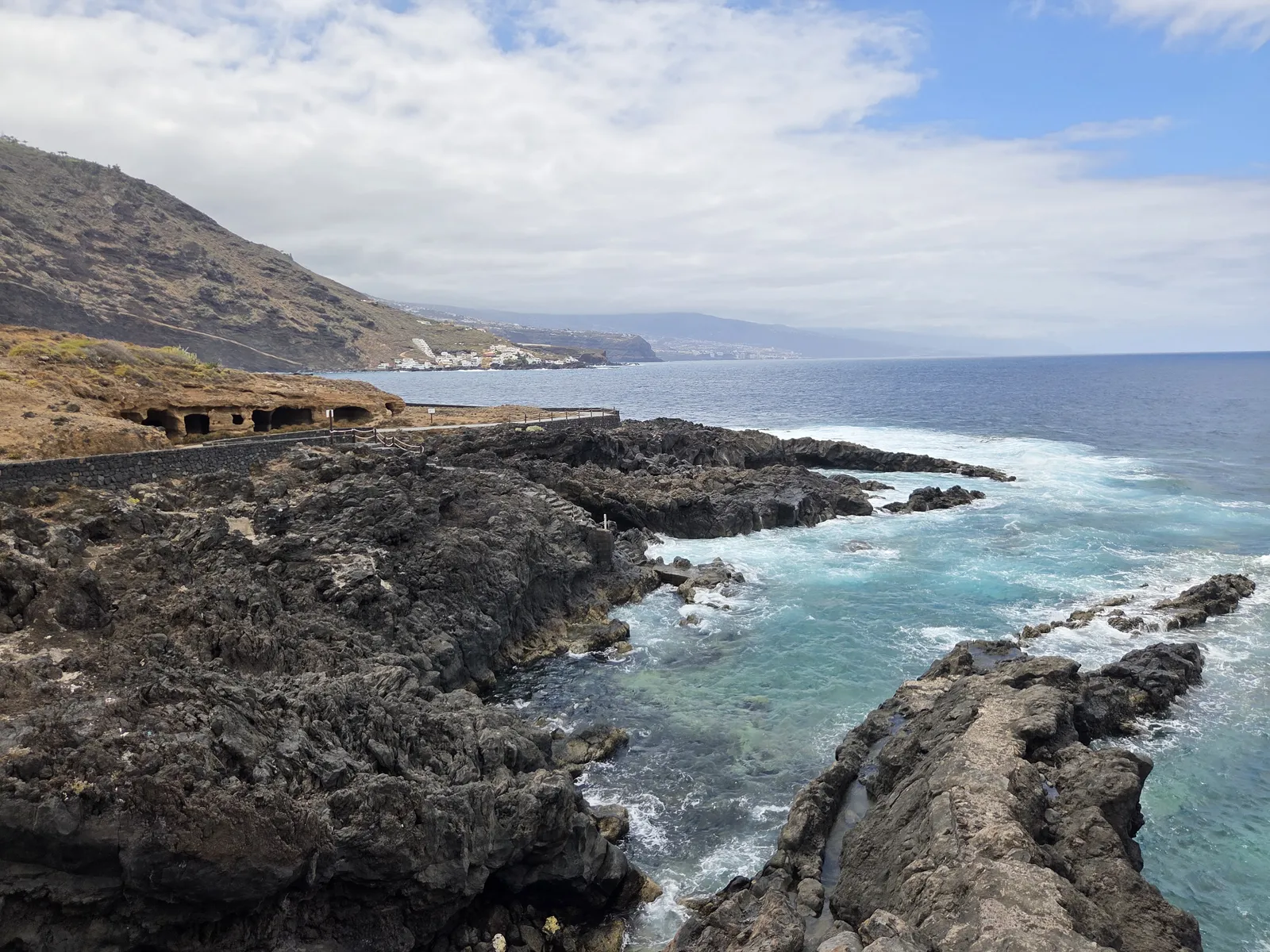
The Costa de El Sauzal reveals a quieter side of northern Tenerife: black volcanic headlands, small coves and a coastal path beneath steep cliffs. Around Rojas, El Cangrejillo and El Puertito, you can explore the shoreline, pause beside natural pools and discover traces of the coast’s former settlements. Come for a relaxed walk and ocean views, with swimming dependent on the conditions.
In this guide
Where is the Costa de El Sauzal?
The Costa de El Sauzal lies below the town of El Sauzal, between Tacoronte and La Matanza on Tenerife’s northern side. The coastal walking area is commonly associated with Costa de Rojas and forms part of the wider Costa de Acentejo Protected Landscape. Its defining features are steep volcanic slopes, rocky shores and the contrast between the cultivated land above and the Atlantic below.
Choose your map destination carefully: El Sauzal town centre, Mirador de Las Breñas and the lower coastal parking area are different starting points. Arriving at the clifftop does not put you beside the promenade. Decide first whether you want a short shoreline outing or a longer walk involving the descent and climb back.
Exploring the coastal walk
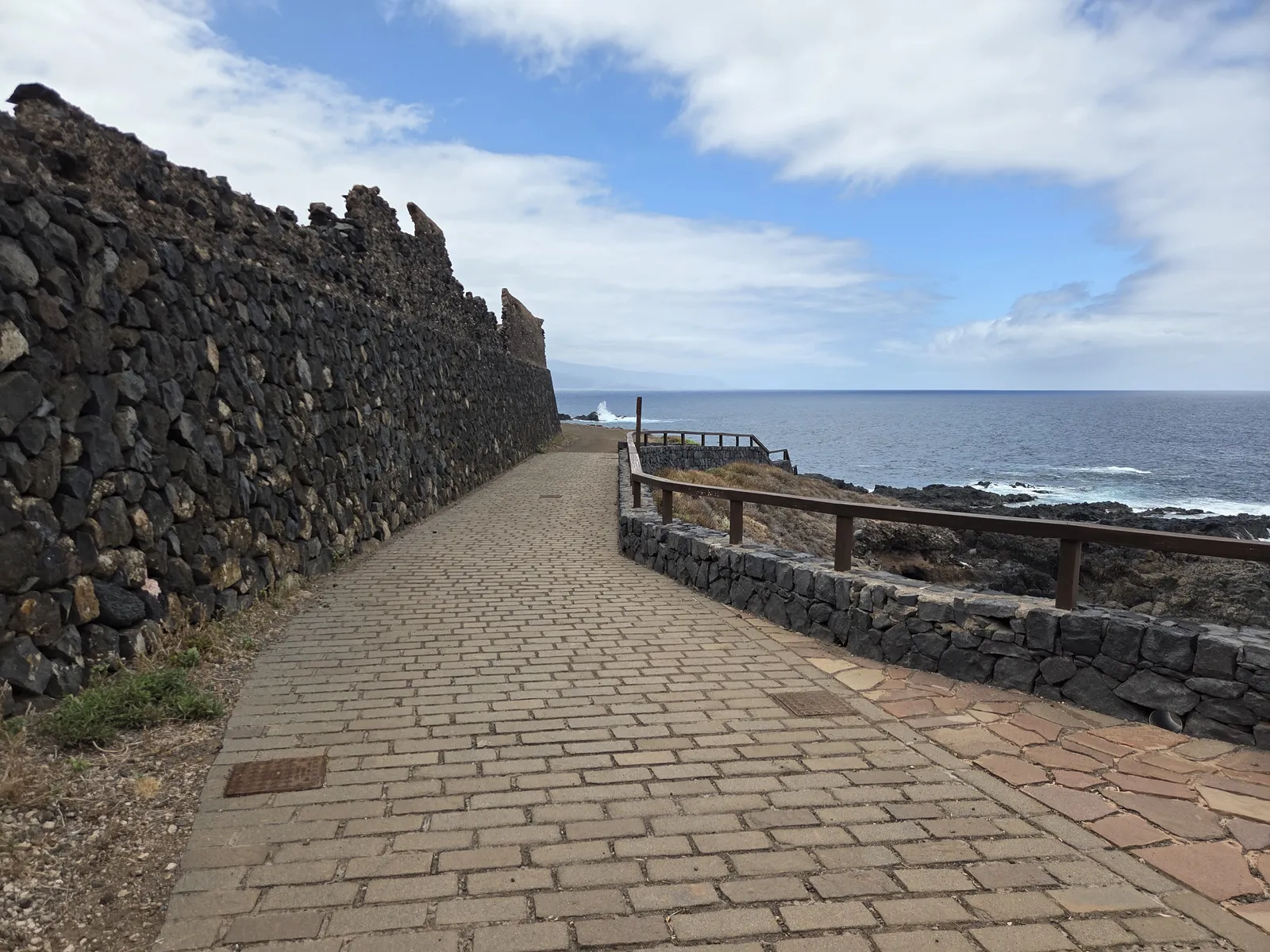
The main attraction is the changing perspective along the waterfront. Paved stretches pass stone walls, rocky recesses and viewpoints, while steps connect different levels. The photographs may suggest an entirely flat promenade, but the full outing includes changes in height: comfortable walking shoes are more useful than beach flip-flops.
From the lower access, explore the signed paths towards El Puertito, El Cangrejillo and Rojas, returning along the established walkway. An out-and-back approach makes it easy to adjust the distance to your energy, available time and any notices on site. Allow roughly 90 minutes to two hours for an unhurried coastal visit with stops; this is a planning allowance rather than a fixed trail duration.
Much of the enjoyment comes from looking both ways. Inland, the cliffs reveal layers of volcanic material and vegetation clinging to the slopes. Seaward, each headland opens another view along the coast. Stay within the public paths instead of following informal tracks towards exposed edges.
Coves, beaches and swimming spots
El Puertito, El Cangrejillo and Rojas
These are the principal coastal areas to recognise along the walk. El Puertito occupies a projecting headland with a small landing place nearby. El Cangrejillo sits within a little bay, while Rojas offers further rocky shoreline and natural pools. Here, “beach” can mean stones and volcanic rock rather than a broad strip of sand.
Enjoy the pools as landscape features first. Their suitability for bathing changes with the swell, tide and water washing over the rocks. Clear water does not establish safe conditions. If waves reach the access steps or sweep across the surrounding ledges, stay back; never enter a pool without a clear, manageable exit.
Los Parrales and La Garañona
Los Parrales and the long dark-sand beach below La Garañona also belong to the municipality’s coastal geography, but they should not be treated as straightforward extensions of the promenade. Their access is more difficult. For a first visit, keep the itinerary centred on the established coastal walk and view La Garañona separately from its clifftop lookout.
Rojas and the coast’s human history
This landscape also records a history of coastal occupation. The public walkway followed a major recovery of the shoreline, with works completed in 2011. Rock-cut openings, surviving walls and altered terraces give the walk a different character from an untouched stretch of coast.
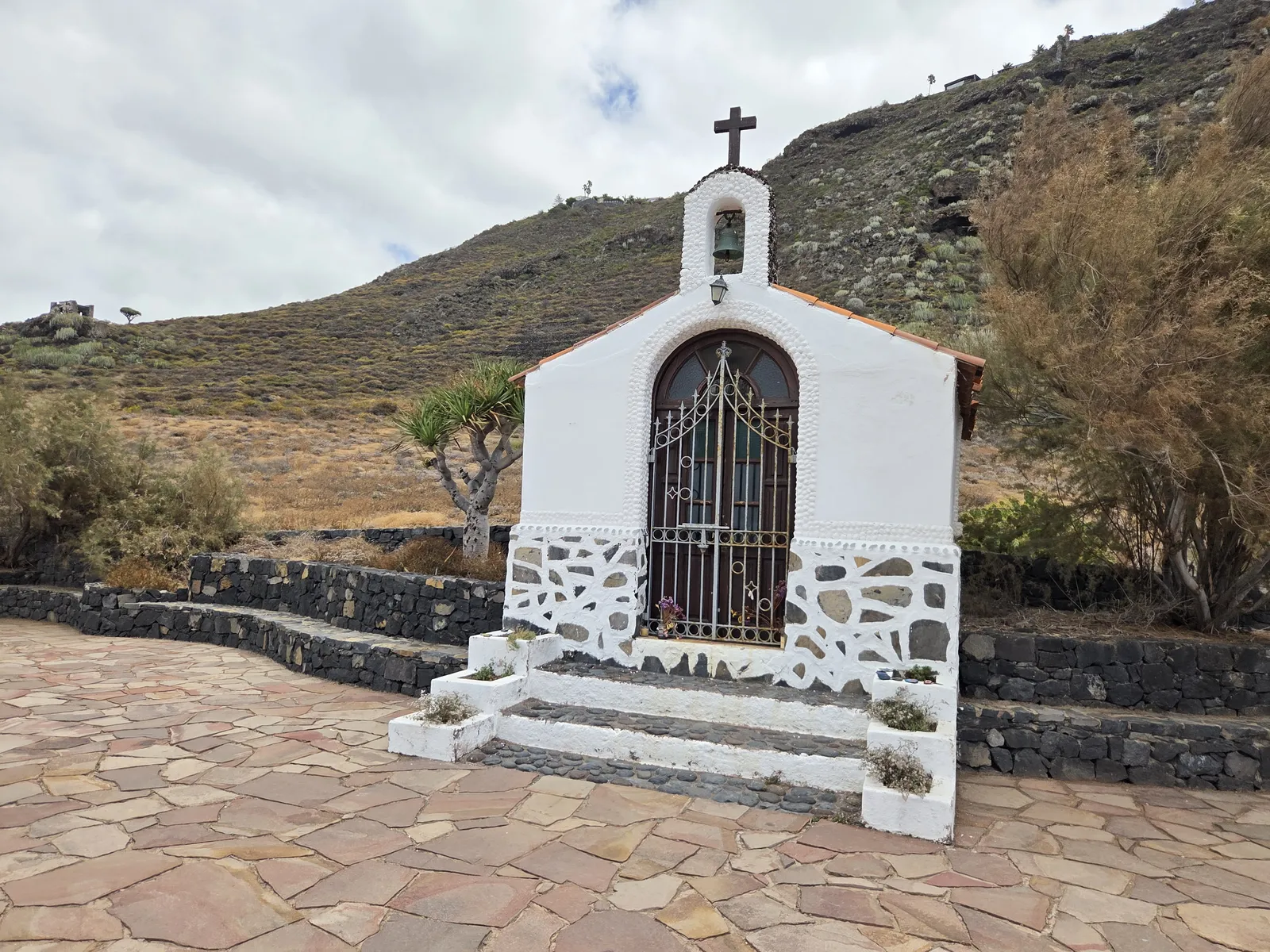
The small Ermita de Rojas provides a distinctive stopping point: a whitewashed coastal shrine with a bell and cross, set against the darker hillside. Appreciate it from the public space outside without assuming that the interior is open. Likewise, view abandoned structures from the path rather than entering them.
The longer walk from Mirador de Las Breñas
For a more substantial outing, consider the route beginning at Mirador de Las Breñas, on Calle Castaño in the La Primavera residential area. The council describes its Las Breñas and Costa Acentejo walk as a six-kilometre return itinerary taking approximately two hours, with a low difficulty rating.
That published time is a walking reference: add time for photographs and breaks. Starting above the coast also means saving energy for the return ascent. Although the route is rated easy, it requires more effort than beginning at the lower car park. Check the trail entrance for current notices before descending.
Getting there, parking and public transport
For vehicle access, the council identifies the entrance near Carretera de Las Breñas, number 76. The road down is narrow and carries traffic in both directions, so descend slowly and leave passing space. Parking below is limited, with some bays subject to a two-hour restriction; read the signs before setting off.
The municipal coastal information page lists access hours of 08:00–22:00 in summer and 08:00–19:00 during the rest of the year. Confirm the current arrangements before travelling, particularly for an evening visit, and follow any temporary maintenance notices.
Without a car, TITSA routes 011 and 012 connect La Laguna with El Sauzal. These serve the upper urban area, so plan the onward walk and return climb separately. Check the precise stop, walking connection and last suitable bus rather than treating the journey as direct transport to the waterfront.
When to visit and how to plan your day
Choose a day with modest swell and comfortable walking temperatures. Morning suits a relaxed outing; late afternoon can bring attractive light, provided you leave enough time before access closes. Carry water, sun protection and a light windproof layer. Bring any snacks you need rather than depending on refreshments beside the path.
Families can shorten the walk, but children need supervision near steps and open water. Do not assume the entire route is suitable for wheelchairs or pushchairs simply because some sections are paved.
A rewarding half-day combines the lower coastal walk with lunch in El Sauzal and a separate stop at Mirador de La Garañona. Choose the Las Breñas descent if walking is your main priority; start below if you prefer to spend your time exploring the shoreline.